Scored for flute, bass clarinet, violin and cello on crooked and bent staves in a graphic style Mr. Pàmies calls “perspective notation,” the piece [IVflbclVIvln/c] elicited an eruptive litany of extended techniques, chaotic and elemental yet discernibly balanced.
—The New York Times
The album’s tour de force is a 2014 piece by Catalan composer Joan Arnau Pàmies, Produktionsmittel I (German for “Means of Production I”), where [Laura] Cocks eventually trades their flute for an aluminum foil sheet and glass bottle.
—Chicago Reader
Joan Arnau Pàmies takes a variety of approaches on a single album, from jazz to pop to modern composition, acoustic to electronic, instrumental to vocal.
—A Closer Listen
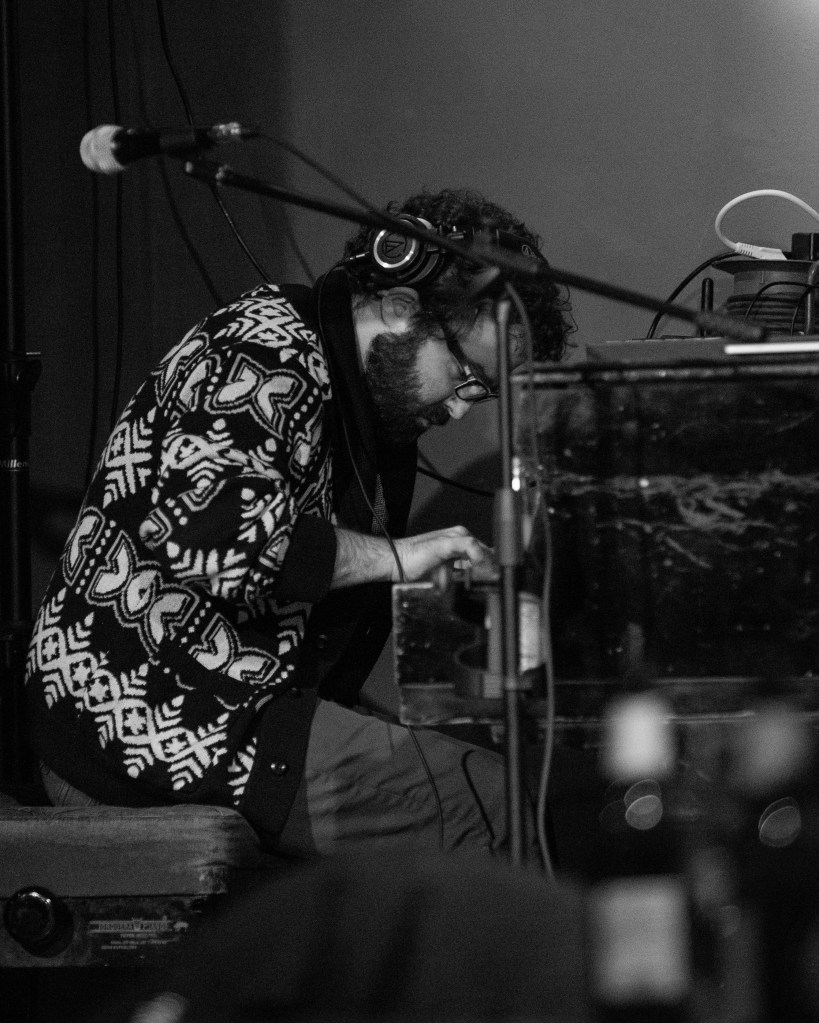
Most of all, though, Pàmies evokes the dusk-hued stillness that unmoored us from a timeline to begin with. Listen to how the arid, Iberian strains of “Malpaís” ease us into the rapturous “Pulse, verticals”—a handoff as tender as a sleeping child trading arms, and always as thoughtful.
—Hannah Edgar
…compositions shaped by precision and freedom of expression.
—Headphone Commute
…a beautifully crafted work that showcases Joan Arnau Pàmies’ remarkable ability to fuse the classical, electronic, and avant-garde into a sound that is both contemporary and timeless.
—Parkett
Pàmies’ production is subtle yet immersive, layering glitchy flourishes with the precision of a composer who understands that space is just as important as sound.
—ADSR
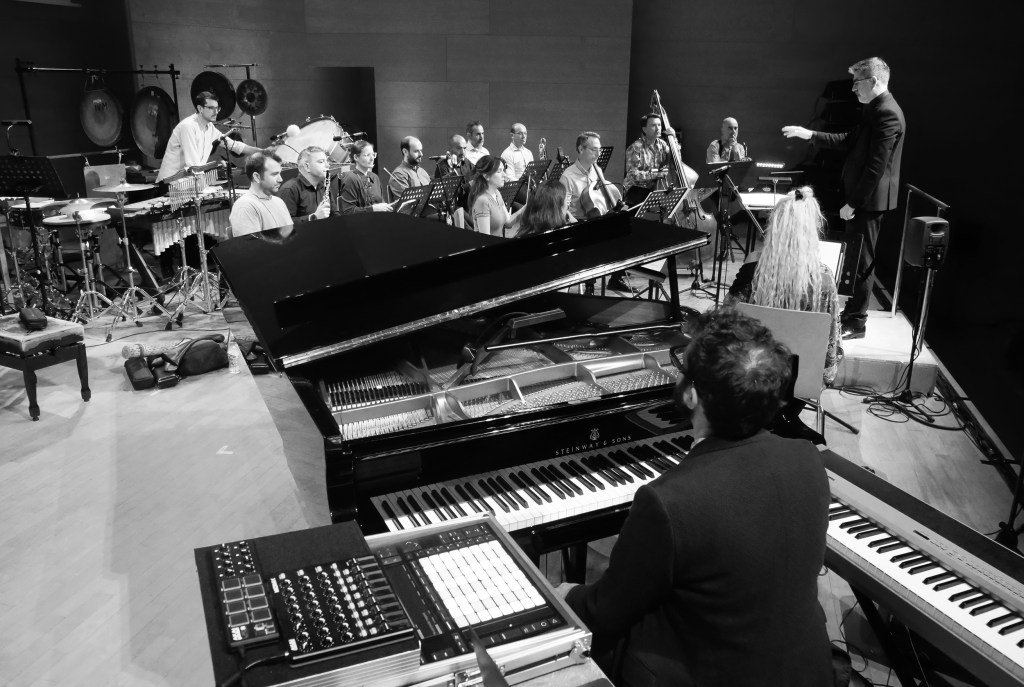
Of the three works of the evening, [Joan Arnau Pàmies’s Lied] was the most beautiful in the Aristotelian sense of proportion and harmony.
—Revista Musical Catalana
The composer’s performance (…) emphasizes the intimacy and significance of each chord, where every moment feels weighty yet perfectly harmonious and balanced.
—Music Dances When You Sleep
It is not easy to achieve a personal and specific sound for a series of pieces, something like finding a poetic voice in the literary field. Joan Arnau Pàmies does it in [Nocturnes, fantasias].
—Melómano
As the track unfolds, subtle electronic beats emerge, shifting the piece into a more rhythmic space. The balance between acoustic and digital elements is finely tuned, creating a sonic environment that is introspective and atmospheric.
—Frequency State
Joan Arnau Pàmies, from Reus, offered a fabulous sequence of his own pieces, which captivated us due to his skill as an engineer of “electroacoustic techniques” combined with his virtuosism as a musician and a pianist.
—Diari de Tarragona
Lead single “Esperança” is a masterclass in layered, minimal rhythms, textures and tone.
—Queen City Sounds & Art
…a dramatic cinematic heft that is deeply woven into its sonic fabric of hope.
—We All Want Someone To Shout For
Delivering a message of humanity’s resilience, “Esperança” provides a stirring glimpse into the meditative and innovative soundscapes that define Guidelines/Fonaments.
—Where the Music Meets
…this was followed by the world premiere of Joan Arnau Pàmies’s [Third String Quartet], which would be worth listening to again.
—Llegir.cat
…the world premiere of Joan Arnau Pamies‘ [IVsax(op_Vlvln/c)] was a great example of this as [Miranda Cuckson] and the sax (Will Ferguson) and cello (Mira Luxion) rendered some of the shrillest, thorniest sound I’d heard in some time.
—The Glass
Λήθη – επιβεβαίωση – ἀλήθεια [Homage to C.P.] by Joan Arnau Pàmies continues with 7 segments of swift, subdued and nearly mechanical ideas that present the saxophone is ways most of us have never heard.
—Take Effect
The artist’s delicacy in the execution of musical notes gives a sublimatory blow to each track. The melodies are soft and intense and the depth of this title plunges us each time into a journey where our reflection is ever more poignant.
—IGGY Magazine
…very cared for sound recordings help to enjoy these pieces: a product of the great mastery that Joan Arnau Pàmies has of these electronic media, as well as of the control that Pàmies himself has carried out throughout the entire process of performance, mixing, and editing.
—Mundoclásico
The spacious dream-pop feeling compels throughout. Also standing out is the two-part “Altered Forms” — whose first entry intrigues in its otherworldly fragments, and second entry struts a late-night, bass-y envelopment. Traversing with creative vigor, Dialectics of Collapse shows an inventive, atmospheric captivation.
—Obscure Sound
All of this is transmuted into Produktionsmittel II, a trio of enormous expressive power, emphatically physical, at the same time thoughtfully intellectual and viscerally artistic as an expression of an emotional state derived from a frustrating experience of reality. That is why the work forms not only a critical apparatus, but a cry of denunciation.
—Mundoclásico
Double bassist Kathryn Schulmeister gave a stunning account of two pieces by Catalonian composer Joan Arnau Pàmies, the latter of which, [k(d_b)s], set about forging a new musical language from scratch, de-coupling performance parameters and working with them independently; it began sounding like a swarm of bees angrily trying to sting their way out of a jiffy bag, but where it went from there is impossible to describe—suffice to say it was truly remarkable.
—5 against 4
The boldest, however, is Joan Arnau Pàmies’ theatrical stress test Produktionsmittel I (2014). There is a real struggle here, both to produce sound and to oversee the process; (…). Imagine Teddy Bear in an episode of Black Mirror.
—Seismograf
Joan Arnau Pàmies was the lone non-Oberlin composer. Chartreuse+’s performance of [IVflbclVIvln/c] was an animalistic freak-out in which Zachary Good coerced astonishing yelps, growls, squeaks, and quacks from his bass clarinet while Hammel, Hinrichs, and Newby made sounds like scratches on vinyl and plastic rubbing against itself. Unless you have a wondrous imagination, that description falls leagues short of the real thing.
—Cleveland Classical
The simple act of breathing also figured prominently in constrained semantic trajectory (the supposedly neutral, supposedly bold, the supposedly neural architecture of non-linear yet steady arrays) by Joan Arnau Pàmies (b. 1988), a composer currently studying for his doctorate at Northwestern University. A tense study of inhalations and exhalations, it shares Czernowin’s fascination with the voice’s textural capabilities—while melody has all but evaporated.
—Seen and Heard International
Over the harrowing 24 minutes of Pàmies’ Produktionsmittel I, it sounds like [Laura] Cocks is trying to battle or devour her instrument, throatily squawking like a wounded animal and then grunting out a final death rattle.
—Stereogum
 Joan Arnau Pàmies